itinerari
All residences

The Ecomuseum’s System of Cultural Itineraries

How do you cross and help others cross a territory?

10/07/202414/07/2024

The residence

The residencies are aimed at designing a system of physical — closely linked to the Ecomuseum’s virtual experience — cultural and environmental itineraries that can guide visitors in discovering the tangible and intangible heritage of the Municipality of Morigerati and this large, emerging tourist district.

Walkers, hikers, guides, cultural and route planners, landscape architects, designers, and architects are invited to Morigerati from July 10 to 14, 2024, to take part in a five-day residential program in which — thanks to the interplay of different disciplines and methodologies, under the guidance of industry experts — they will immerse themselves in the process of designing and co-creating the Ecomuseum’s system of thematic, cultural, and environmental itineraries and will contribute directly to the installation of signage.

HOW DO YOU PLAN A ROUTE?

The residencies will begin with a theoretical, inspirational phase focused on analyzing case studies in the presence of designers and founders — including the Byzantine Trails, the St. Nilus Trail, and the Valle della Lontra Trail — during which participants will delve into the criteria, guidelines, and approaches to route design, including through opportunities to explore the local area and its environmental and cultural heritage.

HOW IS A TRAIL CREATED?

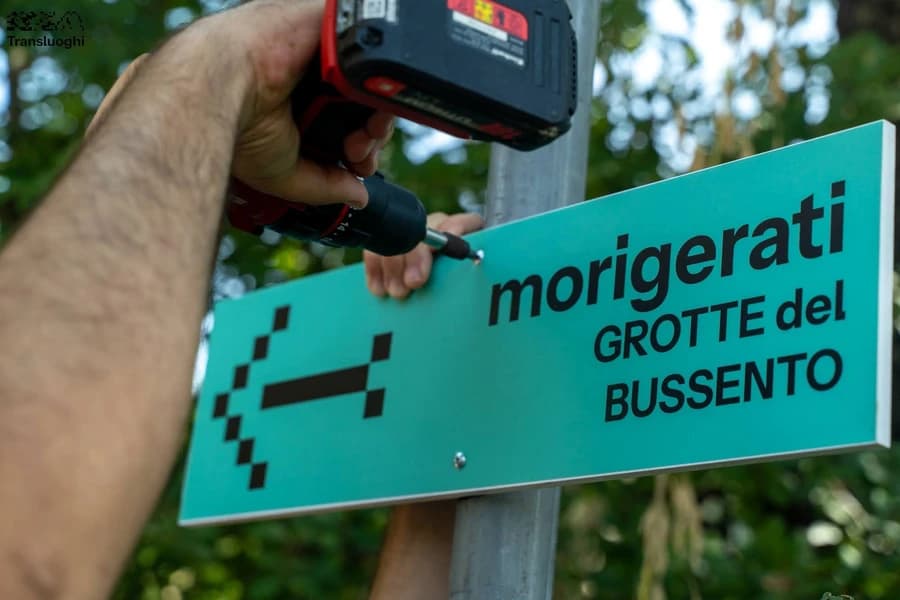
The second part of the residencies involves a hands-on immersion in the trails of Transluoghi — starting with learning techniques for securing and mounting supports and signs, as well as maintaining trails, and continuing with the division into groups and teams equipped with tools, panels, and signs for the physical installation of signage, culminating in the inauguration of the new system for promoting the area’s tourism and cultural experiences.

Program

Wednesday, July 10
  • 1:00–3:00 PM > Participants arrive and check in.
  • 3:30–8:00 PM > Introduction to TRANSLUOGHI – Ecomuseum of Contemporary Bussento. Presentation of the projects and residencies, as well as the experts and participants. Inspirational examples and case studies—Byzantine Trails, the Path of St. Nilus, and the Otter Valley Trail. Criteria, guidelines, and approaches to route design. Opportunities for individual and collective reflection.
Thursday, July 11
  • 9:00 AM–1:00 PM > Exploration of the local area and its environmental and cultural heritage along the Ecomuseum’s trails.
    Training in techniques for securing and installing signage and maintaining trails.
  • 3:30 PM–8:00 PM > Exploration of the local area and its environmental and cultural heritage along the Ecomuseum’s trails. Learning techniques for securing and installing signage and maintaining trails. Division into groups and work teams. Opportunities for individual and collective reflection.
Friday, July 12
  • 9:00 AM–8:00 PM (with a lunch break) > Exploration of the local area and its environmental and cultural heritage along the Ecomuseum’s trails. Division into groups and work teams equipped with tools, panels, and signs for the physical installation of signage along the Ecomuseum’s trails. Time for individual and group reflection.
Saturday, July 13
  • 9:00 AM–8:00 PM (with a lunch break) > Division into groups and work teams equipped with tools, panels, and signs for the physical installation of signage along the Ecomuseum’s trails. Time for individual and collective reflection.
Sunday, July 14
  • 9:00 AM–1:00 PM > Division into groups and work teams equipped with tools, panels, and signs for the physical installation of signage along the Ecomuseum’s trails.
  • 3:00–4:00 PM > Inauguration of the system of cultural and environmental trails of TRANSLUOGHI—Ecomuseum of Contemporary Bussento. Closing remarks and check-out.

The people

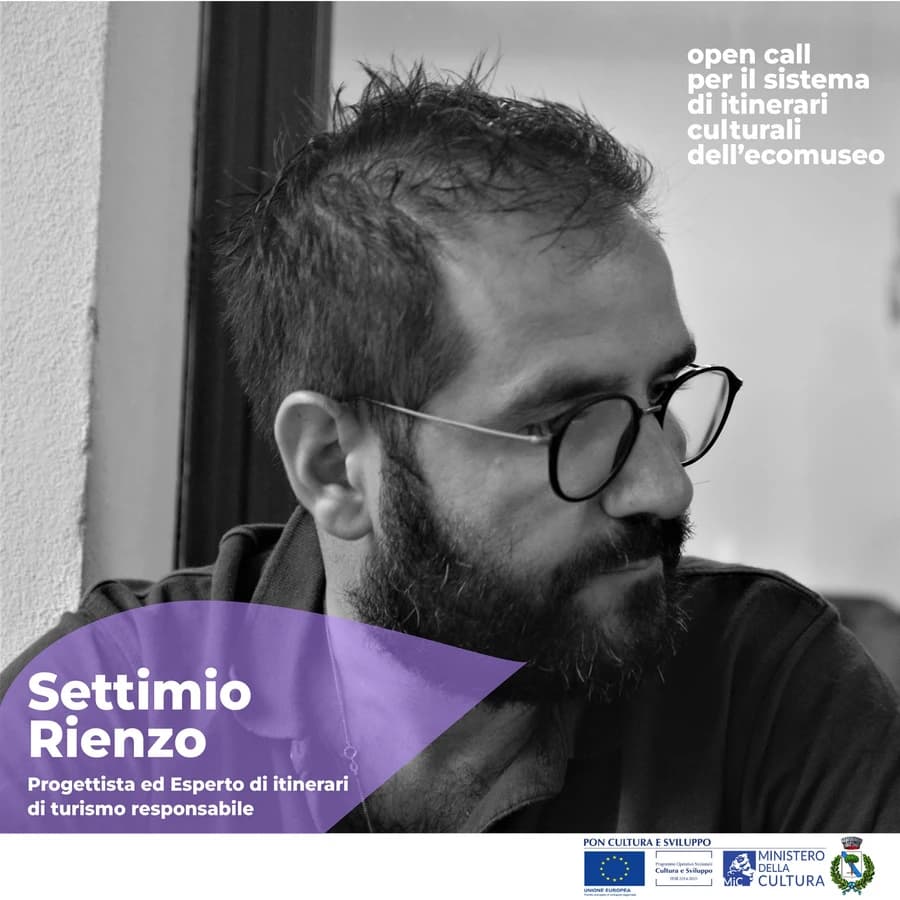
settimio rienzo

Settimio Rienzo

Tutor

Cammino di San Nilo

45 years old. She graduated from the Università Orientale in Naples in 2003 with a degree in International and Diplomatic Sciences, specializing in Development Policy, with a thesis on the international protection of refugees. This followed an internship at UN Headquarters in Geneva and a semester at the University of Glasgow in Scotland through the Erasmus Program. In 2004, he completed a master’s degree in international cooperation and won a scholarship for an internship in Argentina; shortly thereafter, he left for Guatemala as part of the International Civil Service “White Helmets Project” with Caritas Italiana. In 2009, he returned to the Vallo di Diano and began working in EU project development. He is the creator of the “Cammini Bizantini” slow mobility project, which aims to promote the inland areas of the Lucanian Apennines. He is the technical director of a travel agency, an expert in responsible tourism itineraries, and the author of the guidebook “Cammino di San Nilo,” published by Terre di Mezzo. Since October 2022, he has worked as an administrative officer at the Vallo di Diano Mountain Community and serves as the coordinator of tourism projects under the Strategy for Inland Areas (SNAI).

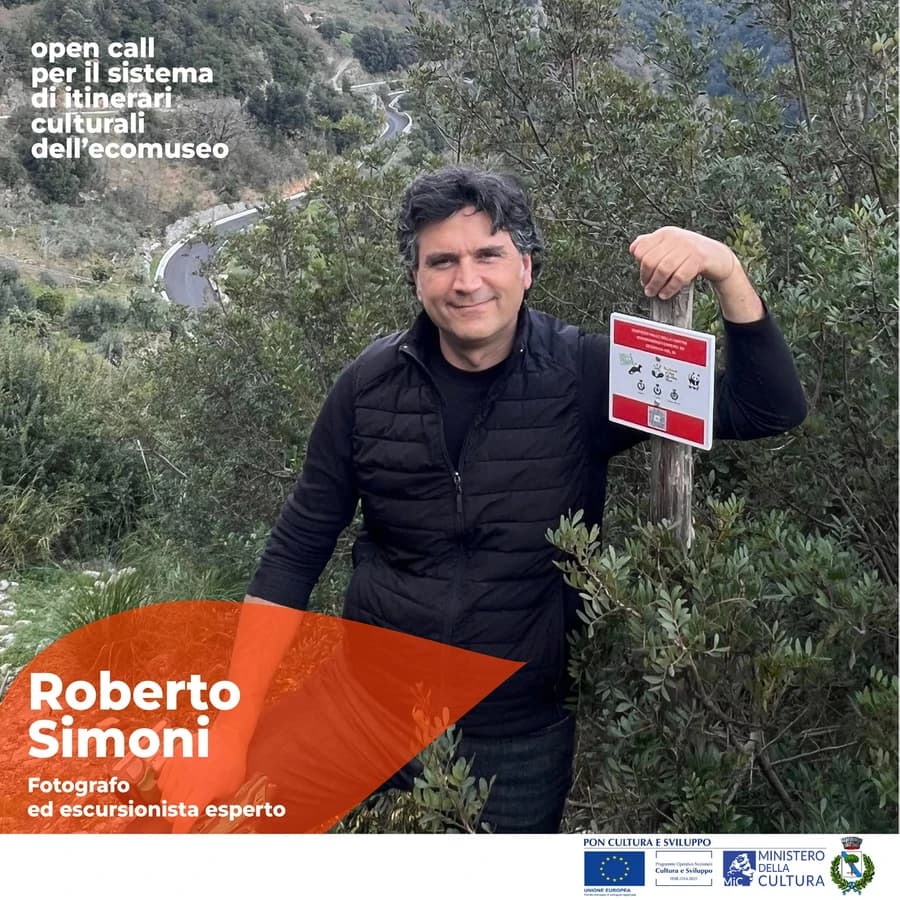
roberto simoni

Roberto Simoni

Tutor

Sentiero Valle della Lontra

Born in Salerno in 1972. He earned a diploma in Graphic Arts and Photography and studied Communication Sciences in Salerno. After about twenty years of experience as a professional photographer in Munich, he decided to return to Cilento, the land of his roots and dreams. He also participates as a tutor at Transluoghi in the Photography and Landscape section. An experienced hiker, together with Miriam Simoni, Arnaldo Iudici, and Settimio Rienzo, he created the “Valle della Lontra” project and supports the “Cammini Bizantini” project with his photographic archive.