Residencies - Land Art and Public Art
Five works of Land Art and Public Art to enhance and expand the region's cultural offerings.
The residence
Creation of five land art and public art installations, aimed at enhancing and expanding the area’s cultural offerings — rediscovering nature and the landscape as tools and mediums for art, capable of inspiring in viewers not only contemplation but also, and above all, reflection.
The residencies are managed by the Zap! Association
“Il Tempo delle Ginestre | Morigerati 2038”
Work curated by artist Luigi Coppola
Viewable at the Antico Frantoio and along the village streets leading to the WWF “Grotte del Bussento” Nature Reserve (Via Granatelli)
The work is a visual narrative that opens up an imaginative horizon of the village in a future time. In 2038, following ongoing depopulation, the residents of Morigerati repeat the action taken by their fellow citizens 50 years earlier: a hunger strike. This time, their determination is to do everything possible to prevent the town’s disappearance, and their most important proposal is the creation of a “School of Territorial Economies” that circulates ideas and initiates and restores virtuous economic supply chains. In the paintings, five views of Morigerati become a new stage for social action. Accompanying this vision are various plants chosen as symbols of a new alliance, such as the broom bushes — which give the work its title — a symbol of courage and extreme resilience in the face of an inevitable fate.
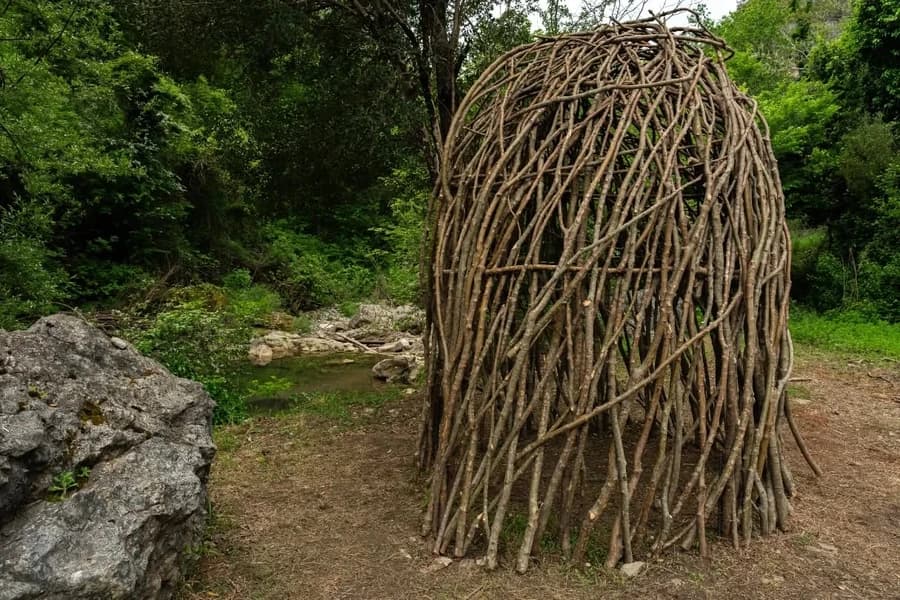
“Lycoperdon”
An installation by the artist DEM
Installed at the Ferriera di Morigerati
Analyzing the term “transluogo” — “trans,” meaning “beyond, through,” and “luogo,” understood as a physical or symbolic space — brought to mind images linked to the passage between worlds, to crossing thresholds, caves, and underground waters that connect the upper and lower parts of the landscape. I also thought of migratory flows, viewed as human movements that have been intertwining for centuries, generating new connections. Hence the idea of a giant mushroom made of intertwined branches, whose symbolic mycelium connects the elements of the territory. The study of the local shrubby flora and the mindful collection of plants led to the definition of the work’s form, location, and dimensions. The intent is to create a landmark that symbolically and physically represents Morigerati through its nature, its history, and its vital relationship with those who pass through it.
“Tinea”
An installation by artist Luis Gomez de Teran
Installed at the medieval bridge in Morigerati
Be butterflies, painted in the colors of dawn and spring; fly over golden flowers and silver mirrors, giving couples the illusion of happiness. I, who am your brother at night, ended up under a bridge chasing a flame that fed my desperate need for light. I, a foolish moth convinced for a moment that I was better than Icarus.
Convinced for a moment that I was better than you.
Convinced for a moment that there was no longer any difference.
“Alta Veglia”
An installation by artists Giancarlo Guadagno and Ilaria Spagnuolo
Installed at the Ferriera di Morigerati
Rising amid trees and silence, this structure stands like a small observation tower immersed in the natural landscape. Entirely self-built using wood — chosen to harmonize with the surrounding environment — the work presents itself as a light presence that respects its host site. Open to the sky, it welcomes the gaze and the air, becoming a space for contemplation and listening. The structure is clad in lightweight canvases created using the botanical cyanotype technique: leaves, branches, and other fragments gathered from the surrounding area have left their blue imprint, like plant memories etched by light. Each fabric panel is a fragment of the place, rendered in a poetic and suspended form. From the top, a few meters above the ground, a view opens up onto the river and the surrounding vegetation. By day, the work invites visitors to follow the movement of the water and the shifting light among the foliage; by night, it becomes a prime spot for stargazing, in a silent dialogue between earth and sky.
“SPORE - Listening Practices for a Diffuse Ecology”
A work by artist Massimo Ferrara
Experienced along the streets of Morigerati using a smartphone and earbuds
A sound art piece, an immersive listening practice that moves through space like a porous organism. It is not about orienting oneself or interpreting: it is about being within. It does not guide; it does not teach. It suspends. The soundscape being explored consists of three environments: Anthropophony — the sound of presence: the sounds of human activity. These are not noises but testimonies. Engines, footsteps, voices, structures, friction: the human becomes sound, becomes a system. Listening to them helps us recognize our own impact on the world and acknowledge ourselves as co-creators of the landscape. Biophony — the rhythm of other living beings: insects, birds, animals, plants. Listening here is symbiosis; it is permeability and requires subtle attention. An invitation to step outside oneself, to perceive oneself as a body among other bodies, all agents, all responsive. Geophony — the body of the world: non-biological sounds — wind, water, stone, electricity. Here, one experiences the landscape as active matter, a body that sounds, vibrates, and participates. It is like tuning into a more ancient, slower memory. “Spore” offers an experience where listening becomes a tool for ecological connection, sensory awareness, and political consciousness.
Program
| RESIDENCY PROGRAM | April 22 Arrival of the artists Tour of the historic center and the Ecomuseum headquarters Setup of the worksites April 23–24–25–26 Construction of the artworks, interspersed with evenings of film screenings and talks April 27 Unveiling of the artworks and closing remarks |
The people
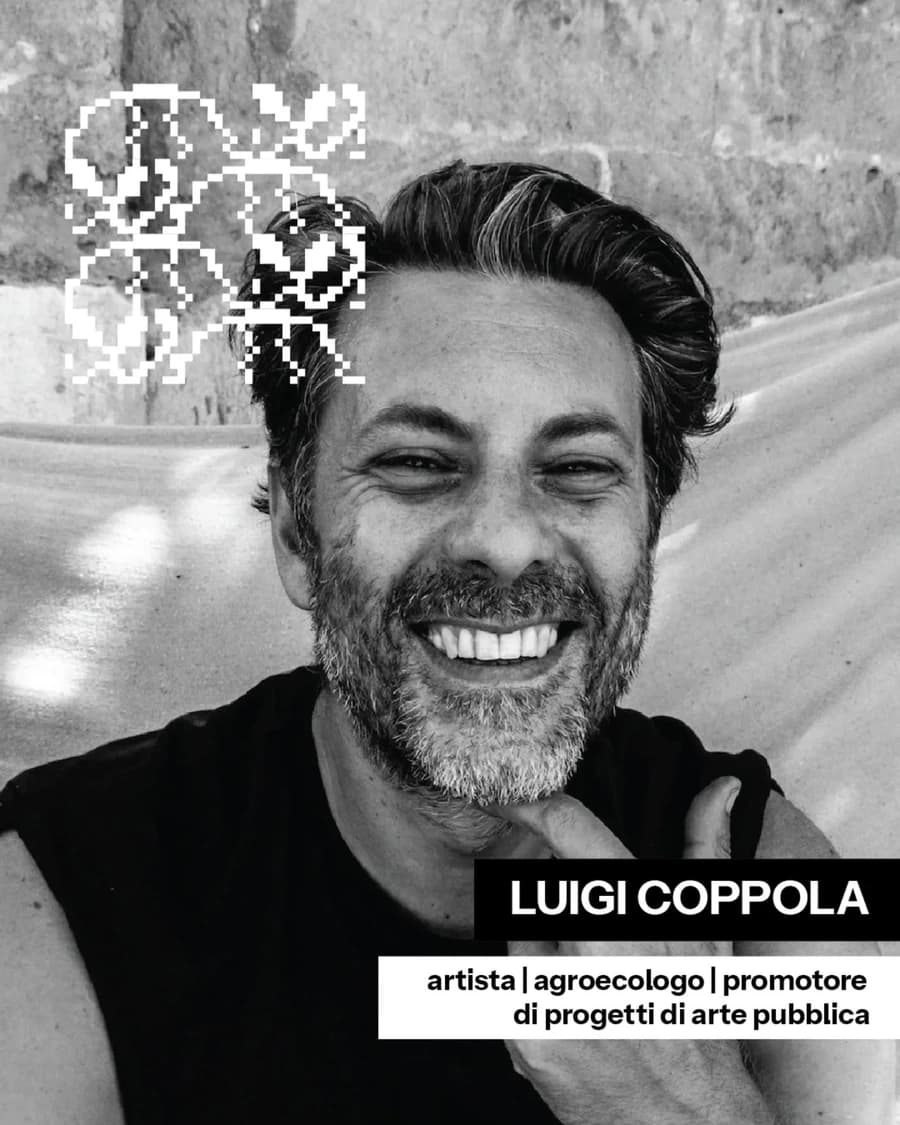
Luigi Coppola
Artist
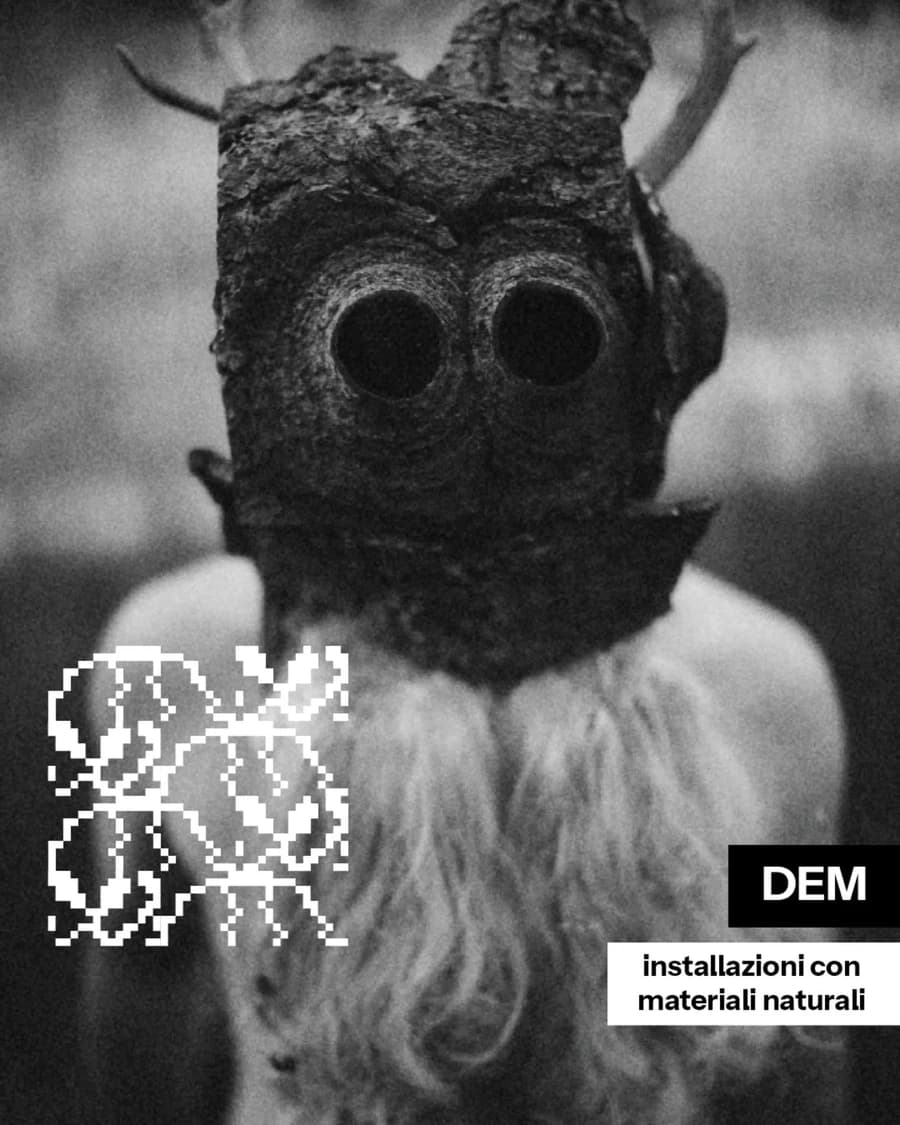
DEM
Artist
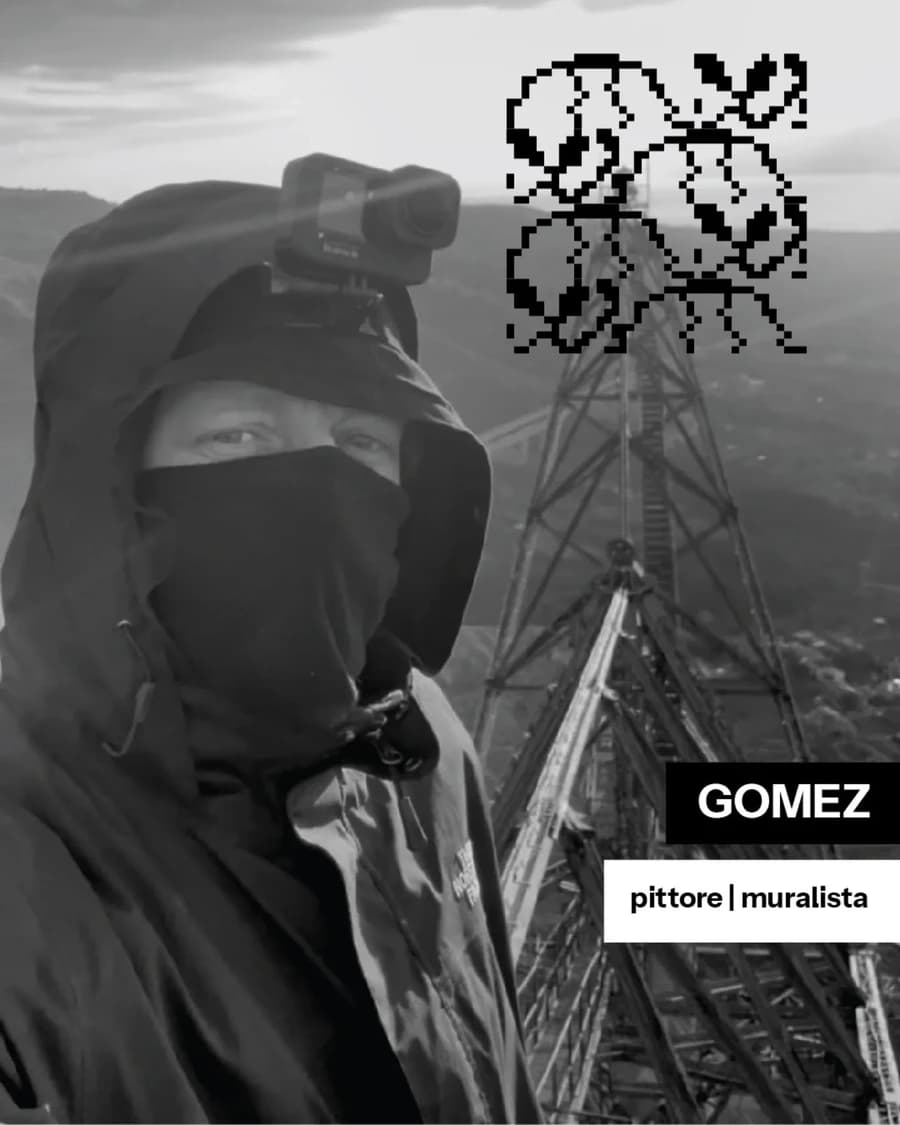
Gomez
Artist
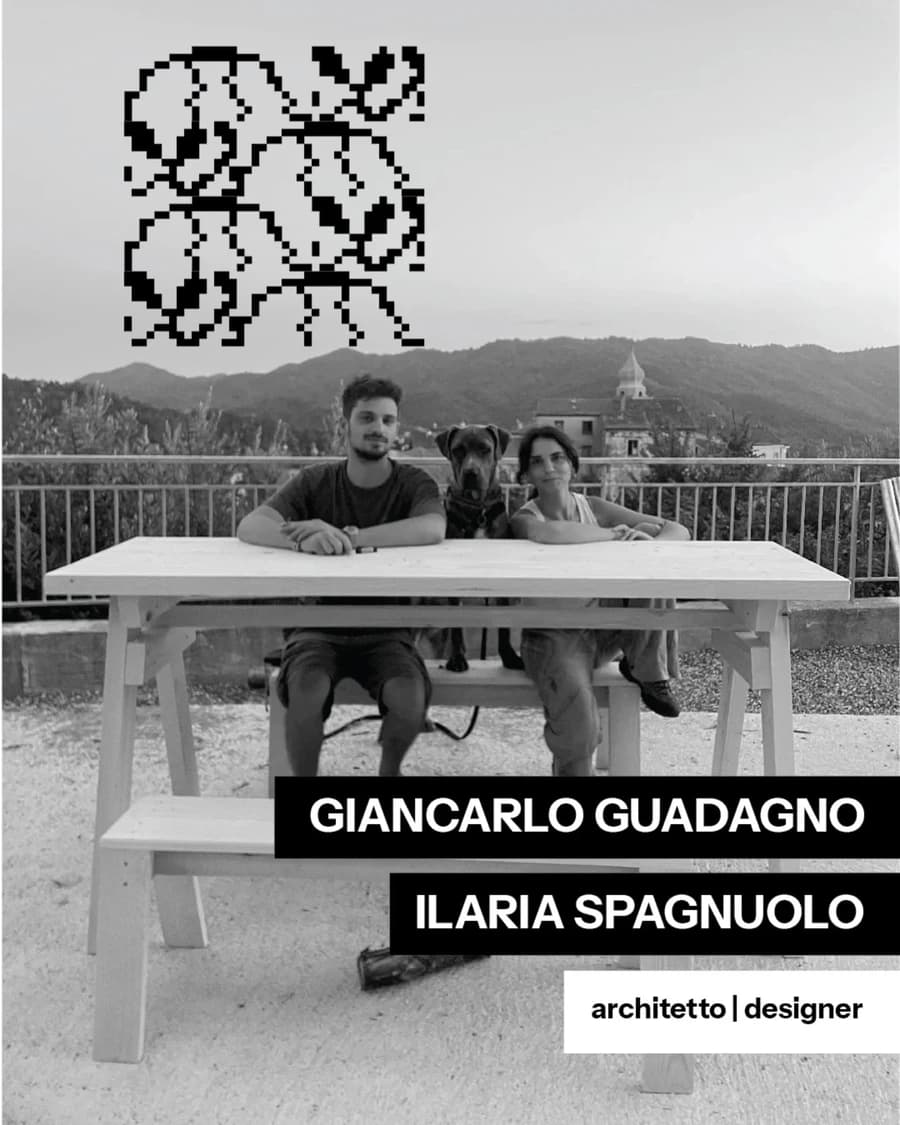
Giancarlo Guadagno & Ilaria Spagnuolo
Artists
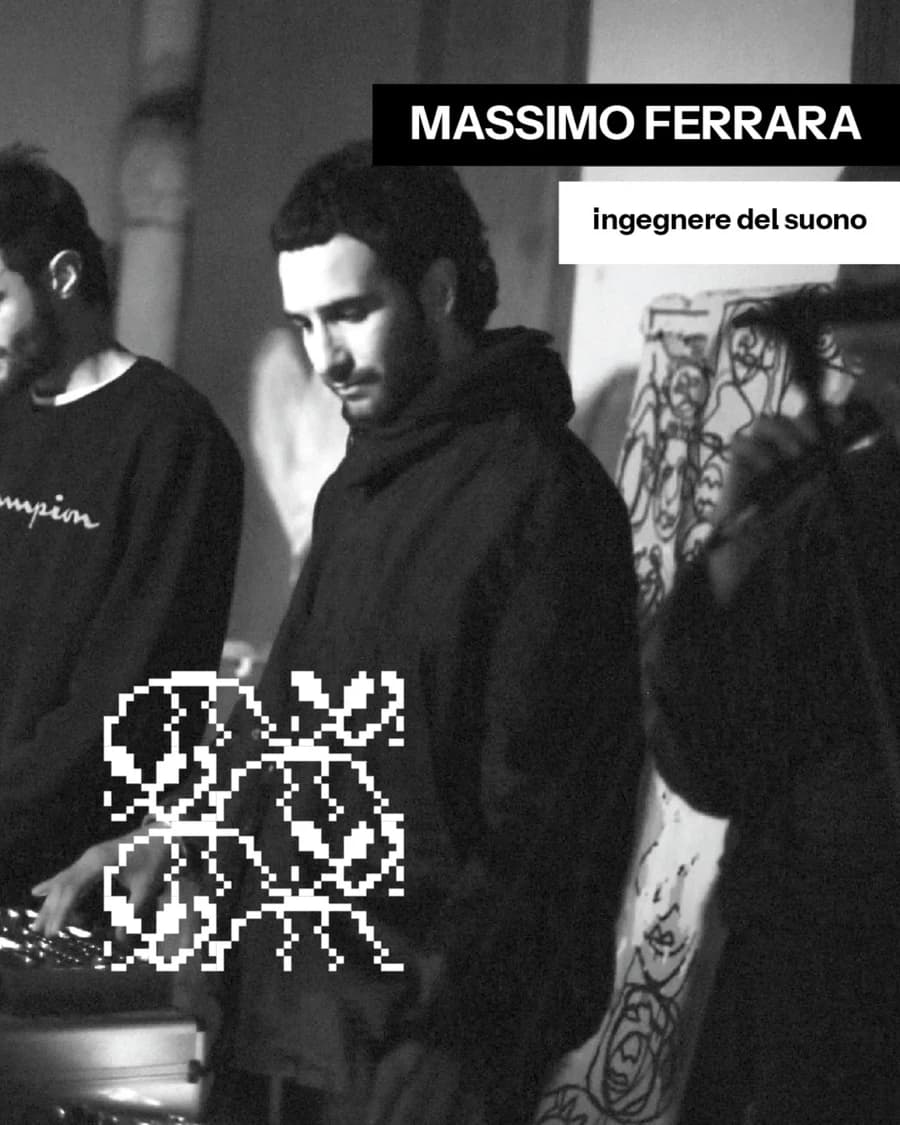
Massimo Ferrara
Artist