videomaking
All residences

Territorial Storytelling and Video Production for the Ecomuseum

An immersive experience in the cultural and environmental heritage of Morigerati, offering a visual narrative of the Ecomuseum through the voices of its residents.

10/07/202415/07/2024

The residence

How do you tell the story of a territory?

THE PRE-RESIDENCY

How should we develop the digital marketing and communication strategy for TRANSLUOGHI — Ecomuseo del Bussento Contemporaneo — while engaging the press and local storytellers?

THE RESIDENCY

The residency aims to create the first audio-visual content intended for distribution across the Ecomuseum’s various physical and virtual platforms, designed to tell the story of its cultural and natural context; the distinctive features of the landscapes and the life stories of those inhabitants who, in this strip of land in the inland areas of the lower Cilento, live, work, and serve as privileged witnesses to the immense local tangible and intangible heritage.

OUTPUTS

The productions we will work on — forming a research and visual creation team led by four external experts — will consist of short biopics of these key figures in the region, the living soul of the Ecomuseum, which will serve as individual pieces of a larger mosaic: a true expression of the plurality of voices, dreams, and desires that make up the TRANSLUOGHI tourism and cultural district.

WHO WE’RE LOOKING FOR

To this end, we are looking for:

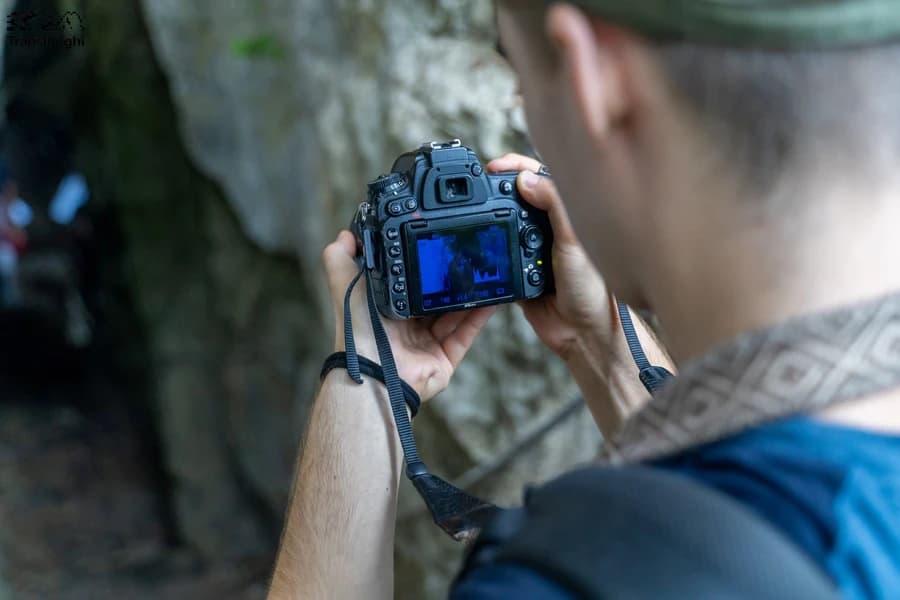
  • VIDEOMAKERS: with strong technical skills and an artistic approach to audio-visual media, who will work alongside external experts in the production of short documentaries and biopics, and who can serve as second camera operators, camera assistants, and/or fill other key technical and artistic support roles;
  • SOUND ENGINEERS: who will help gather firsthand accounts from our protagonists, while also capturing the setting, atmosphere, and unique context in which their stories unfold;
  • RESEARCHERS: anthropologists and sociologists who wish to engage in collecting these life stories, helping to bring to light themes related to the expressed and unexpressed identity of the region.
PLANNED FILM CREWS UPON CLOSING OF THE CALL

3 film crews + 1 independent group

COMPOSITION OF THE FILM CREWS
  • Camera A (external expert)
  • Camera B
  • Sound Engineer
  • Gaffer/Electrician
  • Behind-the-scenes (BTS) operator + photographer

Program

PRE-RESIDENCY PROGRAM

Wednesday, July 10

  • 2:30–3:00 PM > Welcome and general introduction.
  • Followed by > first physical exploration of Morigerati.
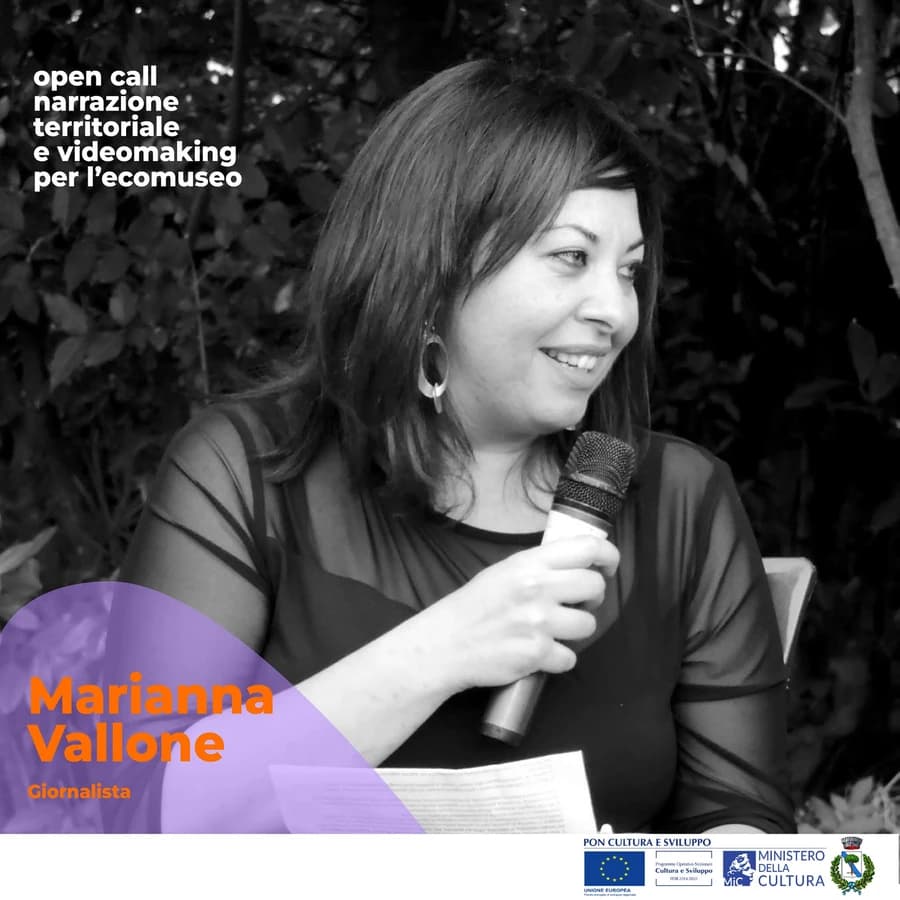
  • 4:00–6:30 PM > Return to the venue—“THE NEWS IS RIGHT BEFORE YOUR EYES! The Journalist’s Perspective as an Interpreter of Reality”—with Marianna Vallone, journalist, press office of TRANSLUOGHI—Ecomuseum of Contemporary Bussento, and Editor-in-Chief of the Giornale del Cilento. “THE RULES OF JOURNALISM—writing workshop.”
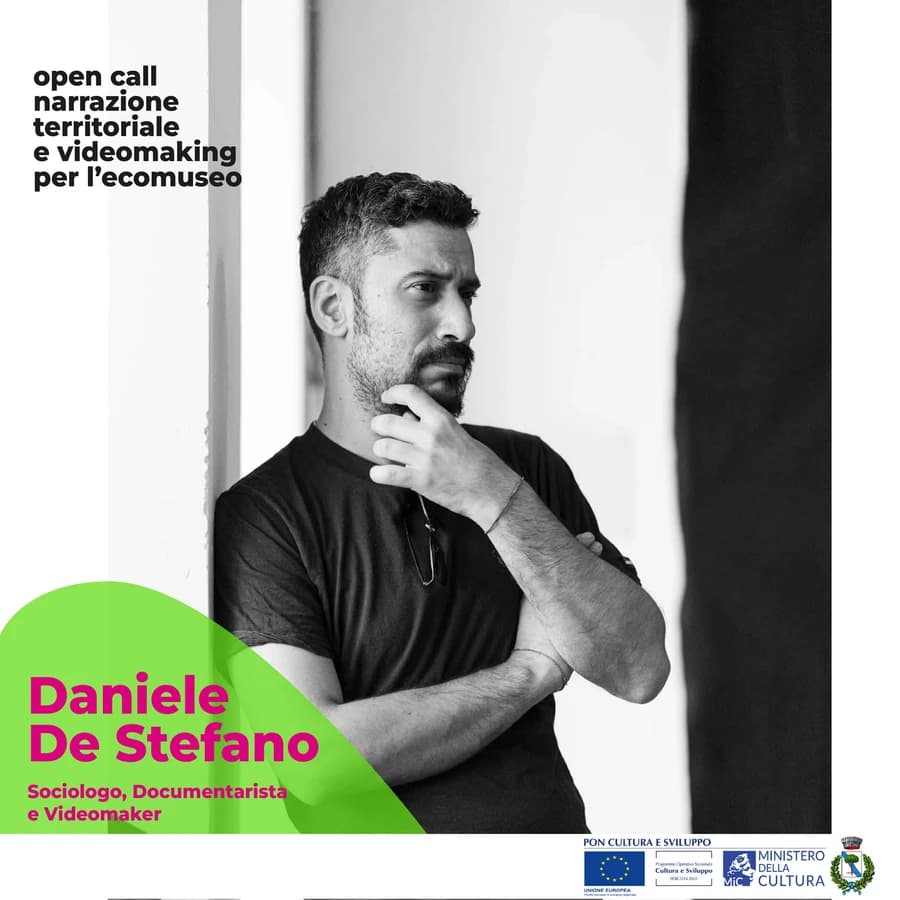
  • 6:30–8:00 PM > “HOW TO USE AUDIOVISUAL MEDIA FOR LOCAL NARRATIVE” — with Daniele De Stefano, videomaker, sociologist, and video director at TRANSLUOGHI—Ecomuseum of Contemporary Bussento. “PHOTOGRAPHIC TECHNIQUES: use of compositional elements, framing, and camera movements.” Presentation of the equipment available at the Ecomuseum.

Thursday, July 11

  • 9:30–11:30 AM > The WWF “Grotte del Bussento” Nature Reserve: Living in Harmony with Water and Its Elements—a collection of firsthand accounts.
  • 12:00 AM–2:00 PM > New ideas for enhancing the organization’s promotional messaging and communication strategies.
  • 2:00–3:00 PM > Lunch break.
  • 3:00–4:00 PM > Visit to the Morigerati Ethnographic Museum with Elfride Caiafa.
  • 4:30–6:00 PM > Workshop: A contemporary narrative for the Morigerati Ethnographic Museum.
  • 6:00–8:00 PM > Journalism and digital storytelling: designing, planning, creating, and distributing editorial content (with a focus on social media and web platforms) — with Marianna Vallone and Rosa Lo Monte, content creators, social media managers, and communications directors for TRANSLUOGHI — Ecomuseum of Contemporary Bussento.
RESIDENCY PROGRAM

Friday, July 12

  • 1:00 PM > Participants arrive.
  • 2:00–3:20 PM > Check-in + group lunch.
  • 3:30 PM > Exploration of Morigerati and location scouting.
  • 6:00–7:30 PM > debrief with the tutors, presentation of the TRANSLUOGHI project, alignment on visual concepts, mood boards, and the film to be created.
  • 7:30–8:30 PM > first cover images.
  • 8:30–9:00 PM > dinner.
  • 9:30–10:15 PM > Organizational meeting: plenary session and division of labor.

Saturday, July 13

  • 7:30–9:00 AM > breakfast.
  • 9:00 AM–12:30/1:00 PM > interview 1 + cover images.
  • 1:00–2:00 PM > lunch.
  • 2:30/3:00 PM–7:00 PM > Interview 2 + background footage.
  • 7:00 PM–8:00 PM > Any follow-up work.
  • 8:00 PM–9:00 PM > Return to the hostel + data transfer (media center).
  • 9:00 PM–10:00 PM > Dinner.

Sunday, July 14

  • 7:30–9:00 AM > breakfast.
  • 9:00–10:00 AM > briefing with all the crews.
  • 9:00 AM–12:30/1:00 PM > interview 3 + background footage.
  • 1:00–2:00 PM > lunch.
  • 2:30/3:00 PM–7:00 PM > Interview 4 + background footage.
  • 7:00–8:00 PM > Any additional filming as needed.
  • 8:00–9:00 PM > Return to the hostel + download data (media center).
  • 9:00–10:00 PM > Dinner.

Monday, July 15

  • 7:30–9:00 AM > breakfast.
  • 9:00 AM–12:30/1:00 PM > interview 5 + coverage footage.
  • 1:00–2:00 PM > lunch.
  • 2:30/3:00 PM–7:00 PM > Interview 6 + background footage.
  • 7:00–8:00 PM > Any follow-up work.
  • 8:00–9:00 PM > Return to the hostel + download data (media center).
  • 9:00–10:00 PM > Dinner.

The people

marianna vallone

Marianna Vallone

Tutor

Marianna Vallone has been a journalist in the field of news reporting since 2009. After studying the humanities, she began contributing to *Il Giornale del Cilento*, where she has served as editor-in-chief since 2017. She has been contributing for years to the daily newspaper *La Città di Salerno*, writing about culture and entertainment, and to *Guide di Repubblica*. She has also contributed to the monthly magazine *Cucina a Sud*. She has served as a press officer for the municipalities of Morigerati and Tortorella, as well as for various local events. She handles communications for three local companies.

daniele

Daniele G. De Stefano

Tutor

He completed his studies in Sociology at the Department of Social Sciences in Naples, specializing in Social and Territorial Policies. He trained as a facilitator in bottom-up urban regeneration processes and has a decade of experience as an activist in urban social movements, as well as an urban anthropologist and analyst of urban and territorial policies. As a filmmaker of documentaries with social and environmental themes, from 2008 to 2018 he collaborated with Neapolitan social cooperatives and nonprofit organizations in the field of migration and served as a trainer for teenagers in the creation of multimedia projects designed to facilitate the dissemination of new community and integration practices. For several years, he collaborated with the television station Insu^TV, producing documentaries, reports, and investigative videos in the Naples area and East Africa. In 2016, together with other colleagues, he founded Recollocal—a grassroots urban regeneration platform—through which he launched the “Transluoghi” project, an artistic and educational residency in the inland areas of Cilento. In 2017, he studied film and cinematography in Naples at ASCI Cinema di Napoli. Since 2016, he has worked as a freelance director of photography on visual projects as a director, editor, cameraman, and director of photography, collaborating with private individuals, organizations, associations, and film production companies. In 2019, he oversaw the visual promotion of several projects for Matera 2019, Capital of Culture, including “La nave degli Incanti” by Gommalacca Teatro. In 2020, he worked on the creation of the Bussento Ecomuseum in Morigerati (eastern Salento) as coordinator and art director. In 2020, he directed the short film “Bardo” for the “Sud e Magia” project of the Lucania Film Festival. In 2021, he was one of the coordinators of the Scampia Urban Ecomuseum for the “Quartieri dell’Innovazione” project, promoted by the City of Naples and funded by the European Union. In 2021, he directed and served as cinematographer for the short film “Fino al mare,” shot in San Giovanni a Teduccio. Since 2021, he has been teaching camera operation (MdP) at the Rea Academy in Naples as part of the cinematography course. He is currently working on two documentaries about small-scale fishing, “Devozione” and “La Baia,” produced by Pelagics—a fishermen’s cooperative.

walter molfese

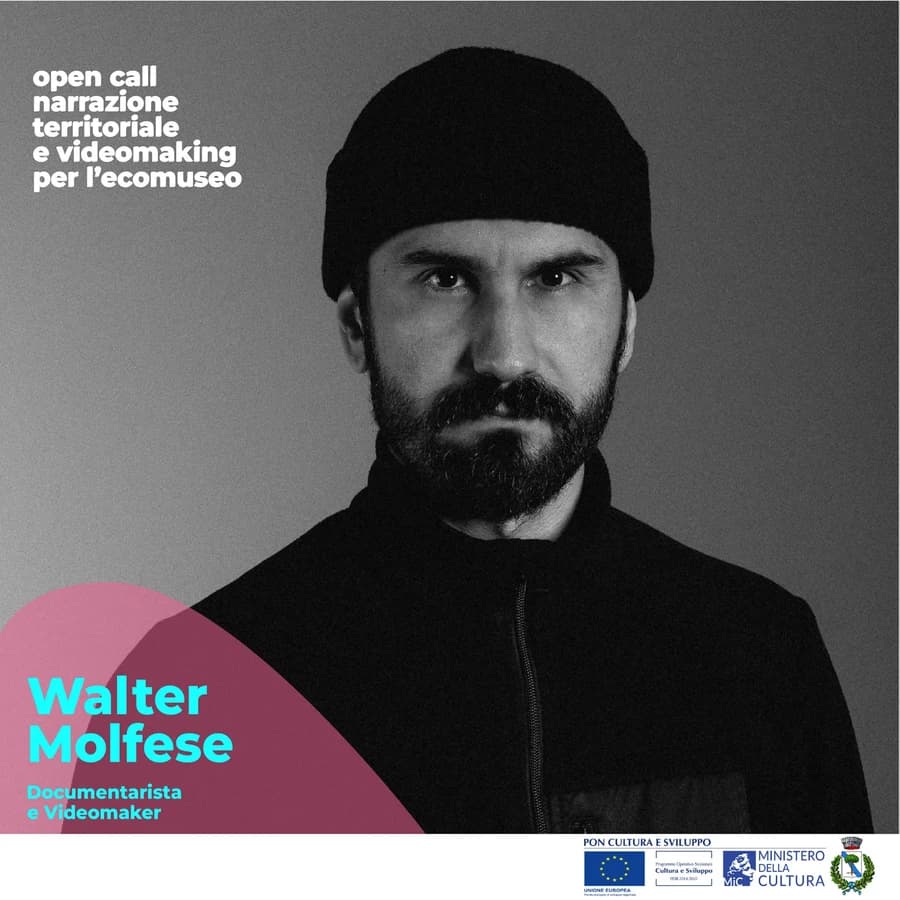
Walter Molfese

Tutor

Walter Molfese was born in 1989 in Basilicata. After completing his technical and scientific education, he decided to devote himself to nature documentaries and time-lapse footage of national and regional parks in Basilicata and beyond. He is the co-founder of Italia Senza Tempo, a project aimed at showcasing landscapes with minimal human impact, in collaboration with tourism promotion agencies (APTs) from various Italian regions. In 2016, he opened a studio within Deposito Zero Studios in Forlì, where, together with other partners, he founded Live Zero, a music format, collaborating with some of the most prominent talents in Italian music. During the same period, he continued to produce documentaries and commercials, working with numerous agencies across Italy, as well as sports-related content thanks to the support of major brands such as The North Face. He is currently working on several sports and advertising projects.

luca manunza

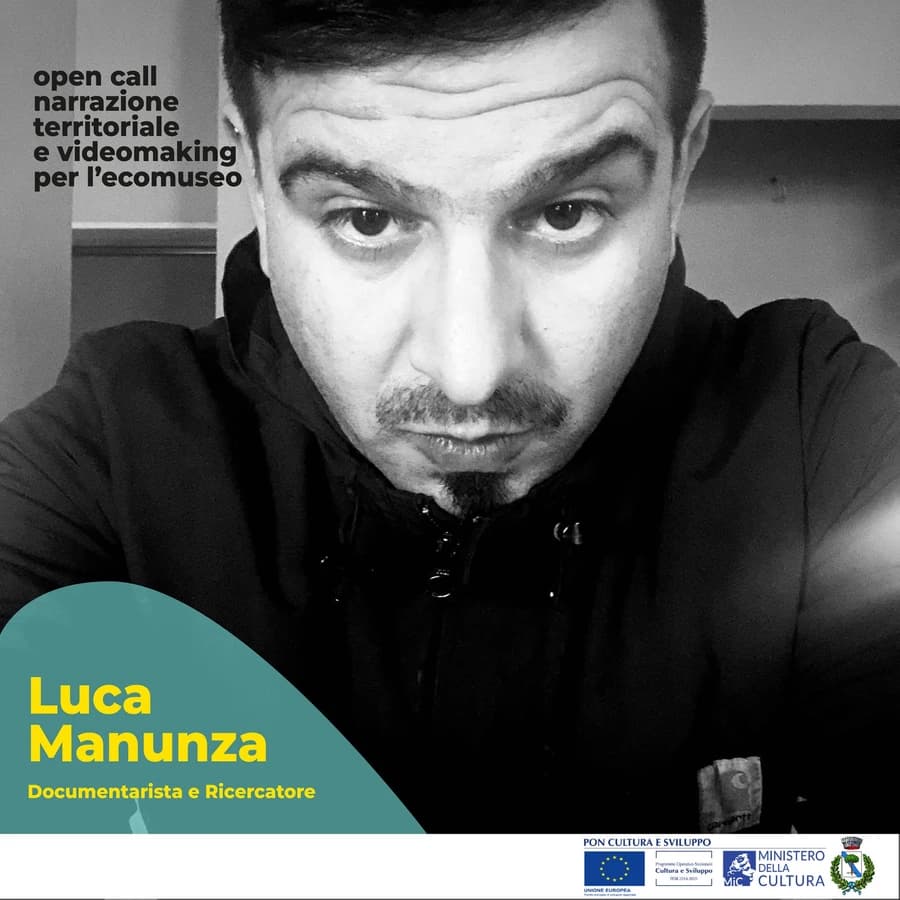
Luca Manunza

Tutor

Luca Manunza earned his bachelor’s degree in 2009 in Communication Sciences, specializing in “Documentary and Socio-Anthropological Reporting,” from the Suor Orsola Benincasa University of Naples. He earned his Ph.D. in Sociology from the University of Genoa in 2014. Since 2005, he has been collaborating with the Department of Sociology at Suor Orsola Benincasa University and with the Department of Urban Planning at the University of Naples Federico II. As a research fellow at URiT (Research Unit on Social Topographies), he serves on the editorial board of the journal *Cartografie Sociali* (a peer-reviewed biennial sociology journal). His research focuses on social control, social movements, migration, and urban transformation. He has worked for Italian and international broadcasters as a freelance director and camera operator in Italy and abroad. He is a member of the INSU^TV collective (an independent Neapolitan “pirate” television station), for which he has produced numerous documentaries, including *Rosarno. *Il tempo delle Arance*, for which he won the Visioni Italiane Award for Best Documentary. Since 2018, he has worked as a line producer and camera operator for the Sardinian film production company TERRA DE PUNT SRL. Since 2020, he has been writing and contributing to the magazine *QcodeMagazine*.

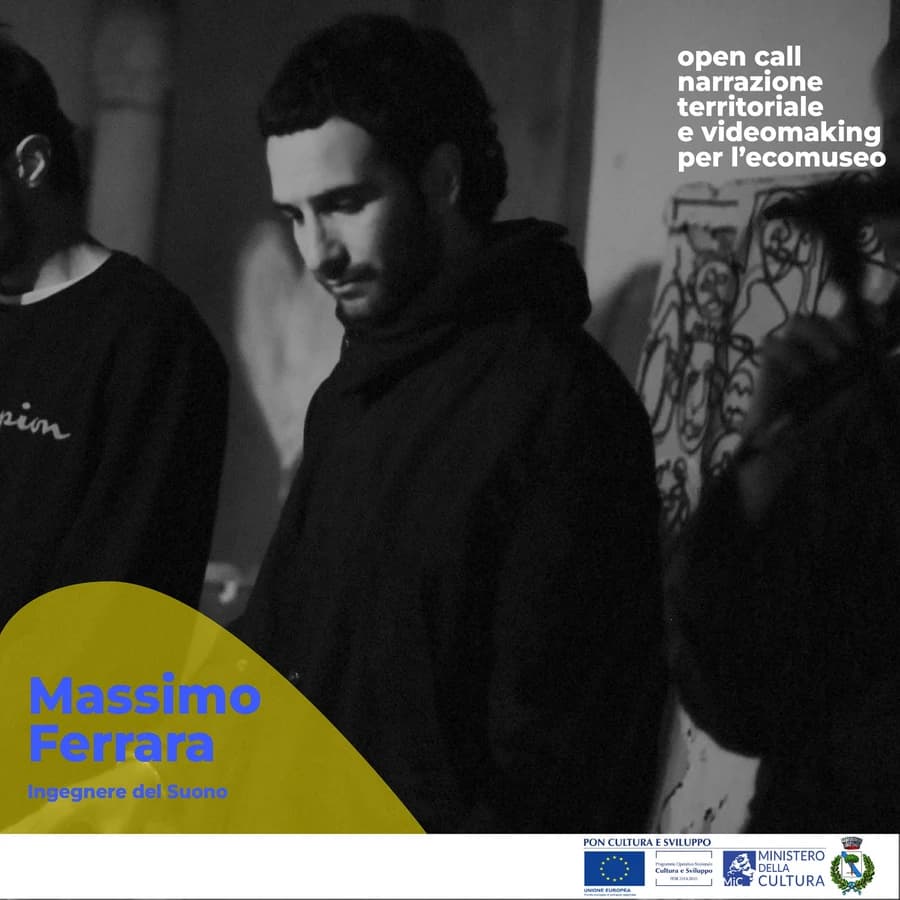
massimo ferrara

Massimo Ferrara

Tutor

After earning his degree in Aerospace Engineering, he focused his studies on the vast world of audio, turning his attention to the most extreme manipulations of digital sound. He primarily works in Interaction Design and Sound Synthesis. He loves taking apart, redesigning, and prototyping sound systems in a DIY style. He is an active member of the audio-video interaction project etali.de and the collective lostdogz krw, with whom he has released several works since 2019.